Highlights
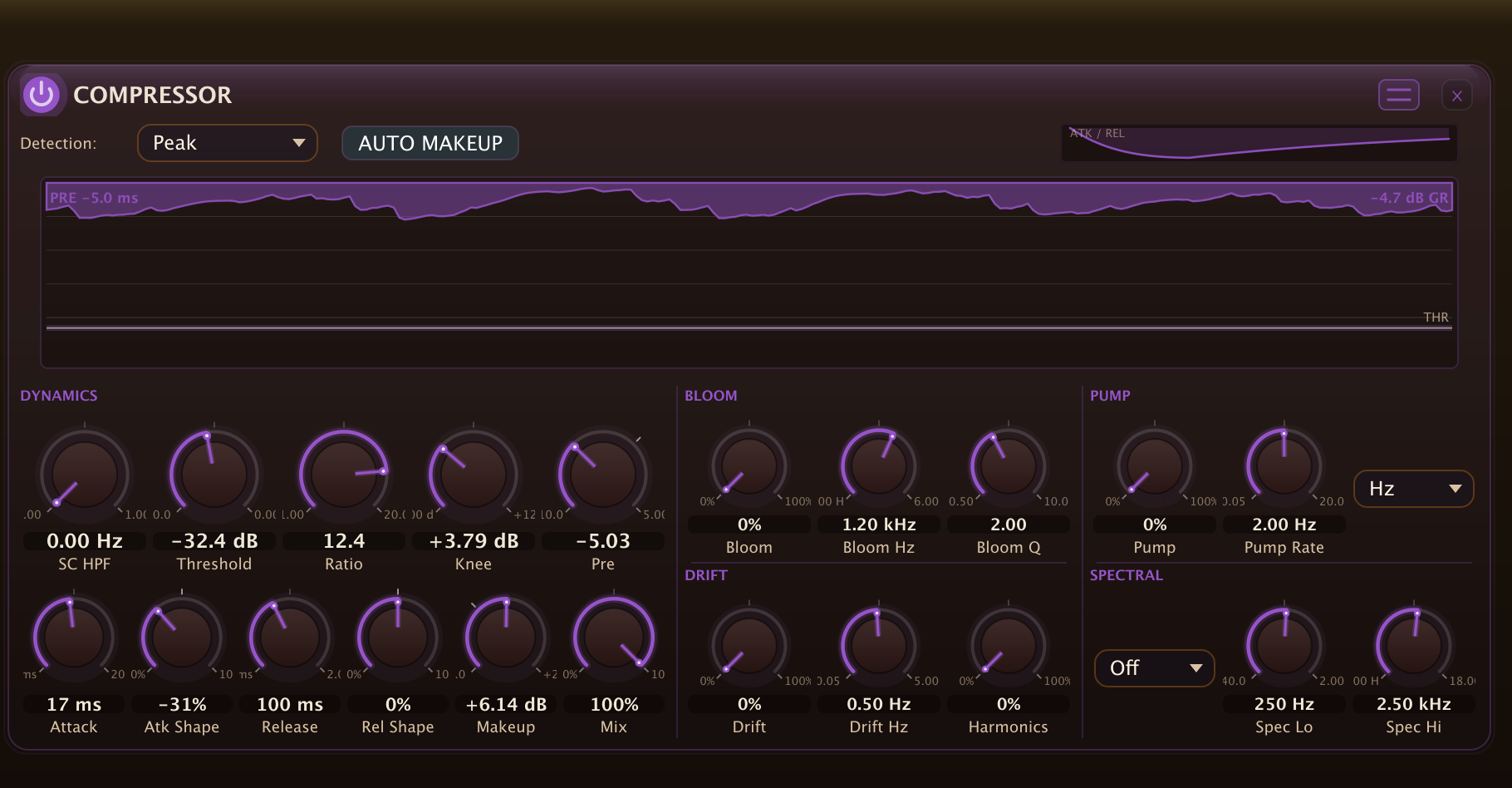
- Compressor: classic dynamics stage (SC HPF, Threshold, Ratio, Knee, Pre, Attack/Release with per-curve Shape, Makeup, Mix) plus four optional character sections you can stack: Bloom (parallel resonant band that scales with gain reduction), Drift (smooth-random walk on Threshold/Attack/Release), Pump (internal sidechain LFO, free Hz or beat-synced), Spectral (2-band or 3-band LR4-flat split), and Harmonics (post-VCA tanh whose drive scales with GR depth). Live ATK/REL curve and GR scope at the top of the card.
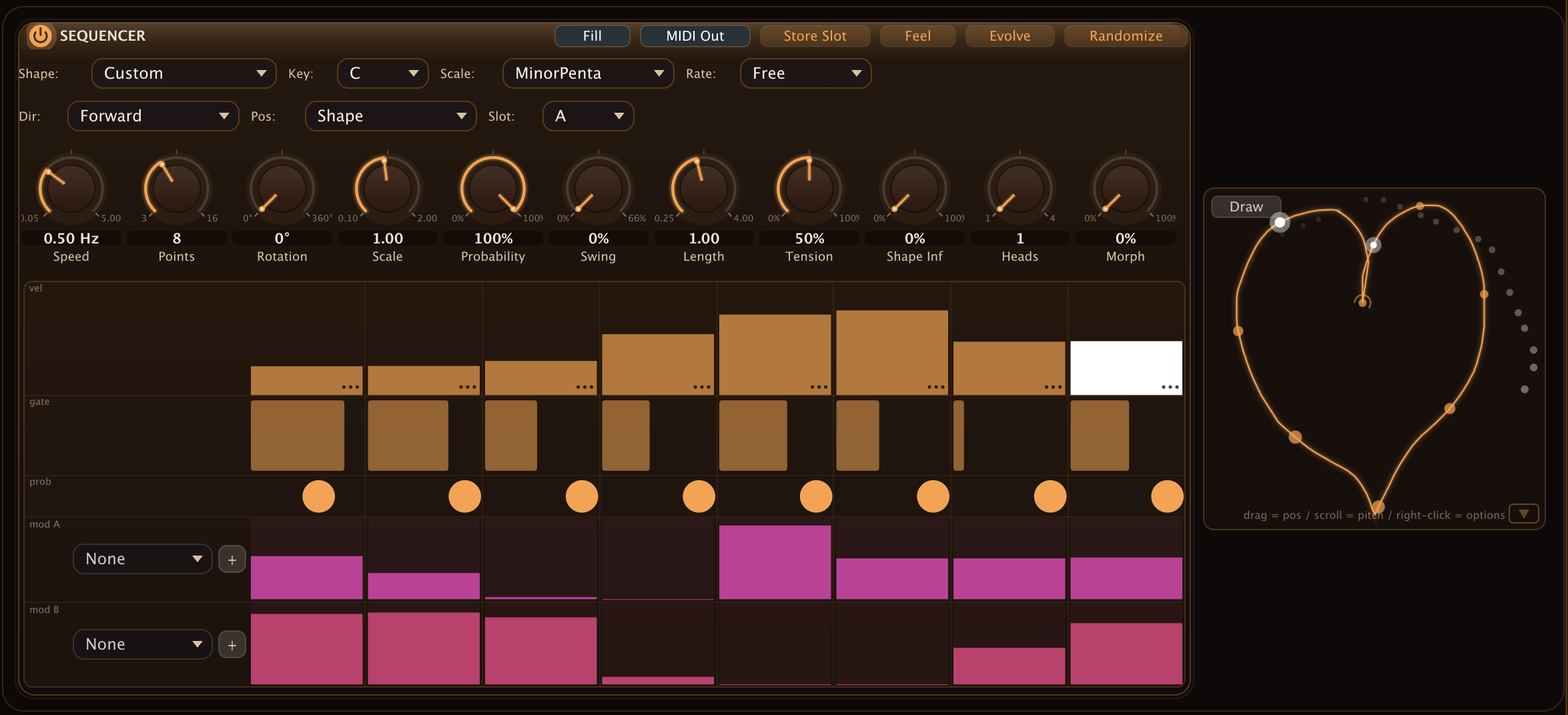
- Sequencer: per-step velocity, gate, probability, and two assignable Mod A / Mod B lanes that route to any modulation destination. Per-step target overrides let one step in your Mod A lane route to Cutoff while the next routes to Resonance, with a short-label badge on the cell so you can see at a glance which step routes elsewhere.
- Sequencer: seventeen conditional triggers (1:2, 1:4, FILL, PRE, FIRST and their inversions). Right-click any step to assign one. Elektron-style long-form variation in one click.
- Sequencer: fractal nodes turn a single step into a sub-step micro-sequence (Roll x2/4/8, Octave Up, Fifth Walk, Scale Walk, Chord Stab, Slide Tail, Snare Ghost).
- Sequencer: eight Feel presets (Acid, Dub, Techno, Ambient, Breakbeat, Drone, Glitch, Trance) that now generate a fresh variation on every click while preserving each genre's signature. No more 'click the preset, get the same pattern'.
- Sequencer: shape-as-canvas Draw mode in Custom shape mode lets you sketch a 2D path on the visualiser. Nodes redistribute along the arc length. Pattern Morph crossfades between four pattern slots (A/B/C/D). Tension macro and Shape Influence knob bend the shape-to-timing mapping live.
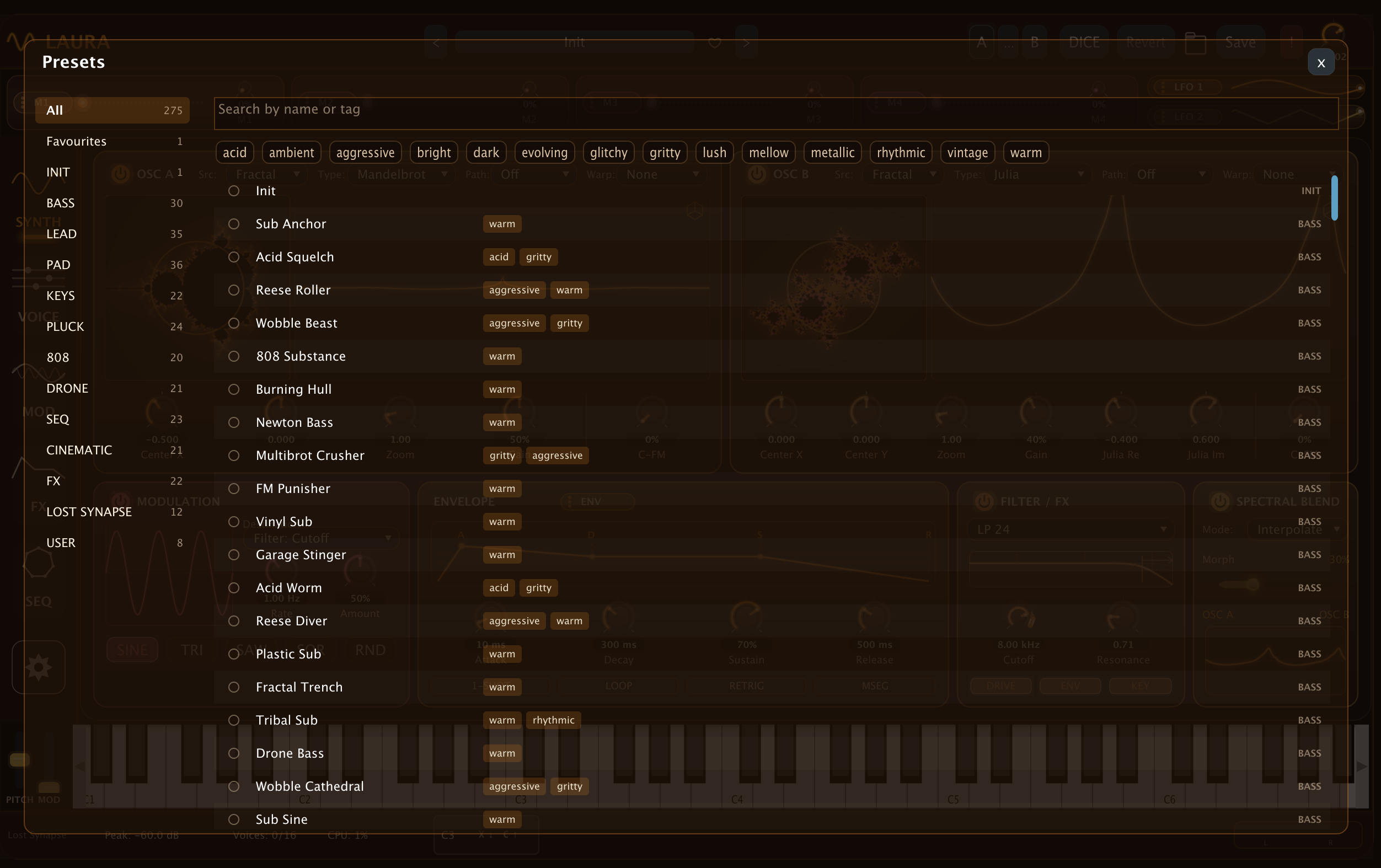
- Preset Browser: full-bleed overlay replaces the hierarchical popup. Left-click the preset name in the header to open it; right-click still gives you the legacy popup as a fast power-user shortcut.
- Preset Browser: search field matches name, tag, and category substrings. Fourteen character-axis tag chips (acid, ambient, aggressive, bright, dark, evolving, glitchy, gritty, lush, mellow, metallic, rhythmic, vintage, warm) multi-select with AND filter. Chips that have no matches under the current sidebar+search grey out, and enabled chips sort to the left so the useful ones are always at hand.
- Preset Browser: all 235 factory presets get tags at startup, derived from a keyword table on the preset name plus a category fallback. Right-click any user preset row for an inline tag editor that writes straight to the file without re-saving the patch state. New Save dialog has a name field plus the chip picker, pre-filled with the preset's existing tags.
- All three features had subtle bugs caught during the WIP phase that are now fixed: ballistics preview matching the engine bounds, spectral 2-band mid-band GR no longer stale, lookahead ring sized for worst-case host blocks, per-node sequencer data now persists through preset save/load, voice-owned scratch buffers cleared on cold note-on, save dialog parented correctly so it actually appears, dirty `*` clears after save, right-click tag menu opens at the cursor.
Details
v1.1.0 lands three pieces that have been quietly cooking on branches for months. None of them were drop-in jobs. Each spent time in flight, gathering scope, hitting subtle bugs, then getting polished. They ship together because they share a release theme: the patch is more than the knobs.
The Compressor began as a normal single-band VCA. What you see now is a left-half dynamics stage that does the textbook job (peak or RMS detection, soft-knee gain computer, asymmetric attack and release with per-curve shape from concave through linear to convex, makeup, dry/wet mix, sidechain high-pass, lookahead and look-behind on Pre), and a right-half stack of four optional character sections. Bloom parallel-routes a resonant band whose level scales with how hard the compressor is working: slot it on a bass and the low-mids breathe with the kick. Drift puts a slow random walk on Threshold, Attack, and Release so the compressor's mood drifts the way an old hardware unit's does, with depth and rate knobs you can ride. Pump is an internal sidechain LFO so you can side-pump without routing anything, free Hz or beat-synced. Spectral splits the signal into 2 or 3 bands with LR4-flat crossovers and runs the dynamics stage independently per band; perfect for taming a busy bus without a dedicated multiband. Harmonics is a post-VCA tanh whose drive grows with GR depth: it wakes up when the compressor pumps, idles silent when it isn't. The visualiser at the top of the card shows the live attack/release ballistics curve next to the GR envelope and threshold line so you can see what you hear.
The Sequencer redesign was the longest of the three. Patches were sounding samey because the sequencer animated pitch, velocity, and gate, and held everything else still. The redesign closes that gap. Each step now carries velocity, gate, probability, and two assignable Mod A / Mod B lanes that you brush-paint across the step grid and route to any modulation destination. The mod lanes alone already make patches feel alive between steps. On top of that: per-step target overrides (one step in the Mod A lane routes to Cutoff, the next to Resonance, the cell shows a short-label badge so the user can see at a glance), seventeen Elektron-style conditional triggers, fractal nodes that explode a single step into a sub-step micro-sequence, eight Feel presets that now reshape the per-step lanes with random per-click variation while preserving each genre's signature, four pattern slots with Pattern Morph crossfading between them, a Tension macro that biases probability and density curves, and a shape-as-canvas Draw mode that lets you sketch a custom 2D path on the visualiser with nodes redistributing along the arc length. Every per-node field now round-trips through preset save and load, which it didn't before; that was the bug that prompted the persistence pass.
The Preset Browser replaces the hierarchical popup with a full-bleed overlay. A sidebar on the left lists All, Favourites, and every category with a live count. A search field matches across name, tag, and category. A row of 14 character-axis tag chips lets you AND-filter the list, with chips that produce zero results greying out and sliding right so the useful ones are always immediately accessible. Right-click any user-preset row for an inline tag editor that writes straight to the file without rewriting the patch state. The new Save dialog has a name field plus the same chip picker and pre-fills with the preset's existing tags so re-saving keeps them. All 235 factory presets receive tags at startup, derived from a keyword table on the preset name plus a category fallback, so no manual tagging campaign was needed to make the browser useful day one. The old hierarchical popup is still available via right-click on the preset name in the header for users who prefer it.
Toward a signed Laura. This is the last release before the binaries get signed. We are moving as fast as we can on the macOS code-signing and notarisation pipeline plus the Windows Authenticode pass. Once that lands, the 'unidentified developer' warning goes away and installers get cleaner across the board.
Manual is next. The in-app manual is the next thing we are building. A chapter per panel, illustrated walkthroughs of the new Sequencer mod lanes and Compressor character sections, and a 'five sounds in five minutes' quick start. Right-click any knob and ask what it does without leaving the synth. A PDF mirror will live on lostsynapse.store.
Thanks for sticking with us through the WIP phases. You are shaping Laura in real time, and it shows.