Highlights
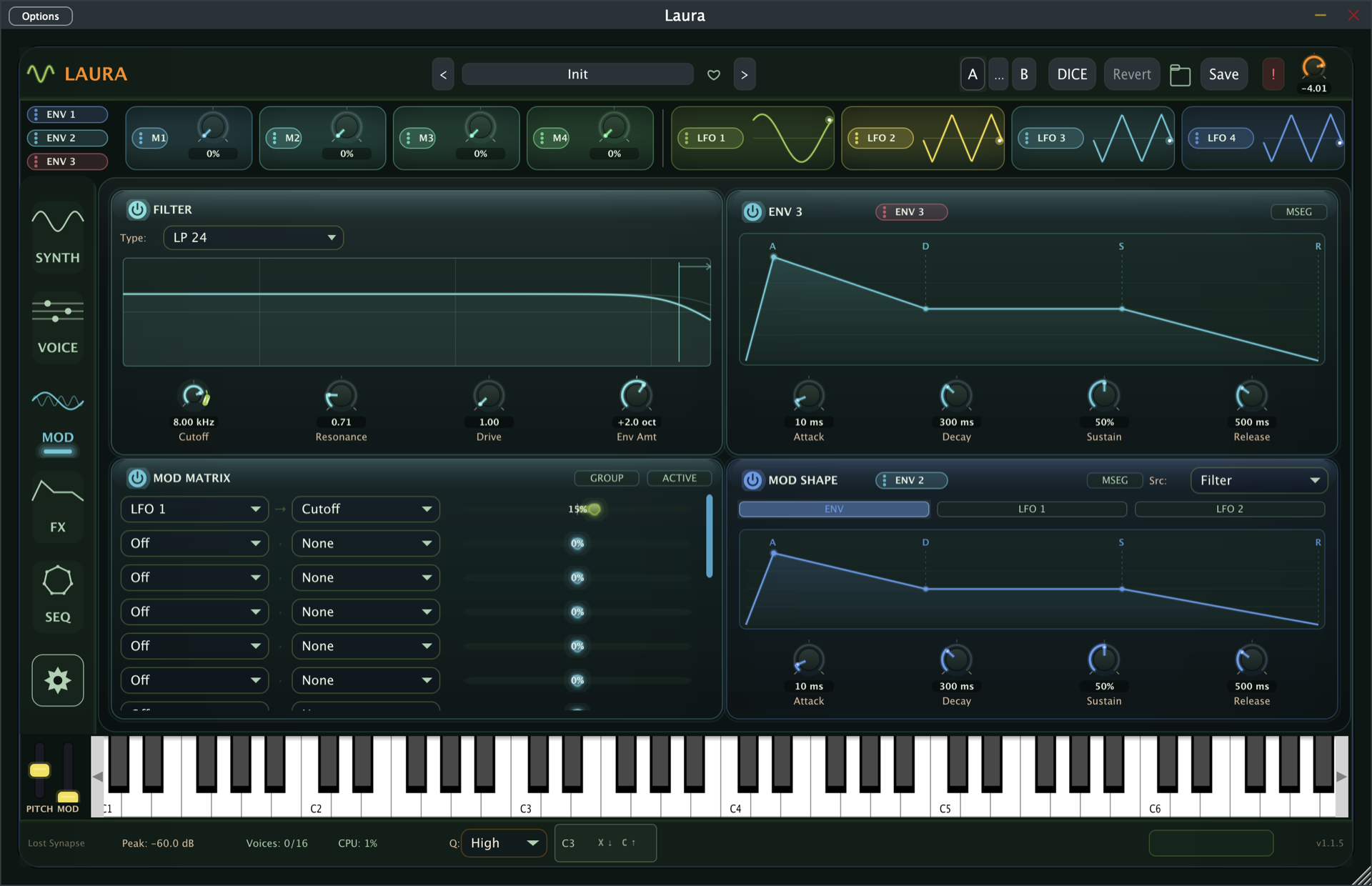
- Four LFOs, up from two. LFO 3 and LFO 4 join the originals in the top strip, each with its own shape, rate, and sync, so you can move four things at once without spending an envelope on it.
- A third envelope, ENV 3. A full ADSR with an MSEG mode, free to route anywhere in the matrix, so the amp and filter envelopes stay where they are while ENV 3 handles the extra motion.
- A sixteen-slot mod matrix, up from four. Drag any source (LFO, envelope, macro, sequencer, velocity) onto any knob to make a routing, or build them in the matrix directly. Each depth slider and its arrow now take the colour of their source, so a glance tells you what is driving what.
- Key-gated sequencer. The sequencer can run free, gate to the keys you hold, or retrigger from the top on each new key, so one pattern can be a drone, a played riff, or a strummed stab.
- Preset browser favourites. Star the patches you reach for most and filter to them in one click. The browser now opens as a solid overlay and pauses the moving background while it is up, so it stays readable and doesn't tax the CPU.
- A preset pack system, and the first pack: Substation, a free techno pack. 27 club-ready patches covering basses, stabs, leads, plucks, and full sequences. Packs install by dragging them onto Laura and appear in their own row in the browser.
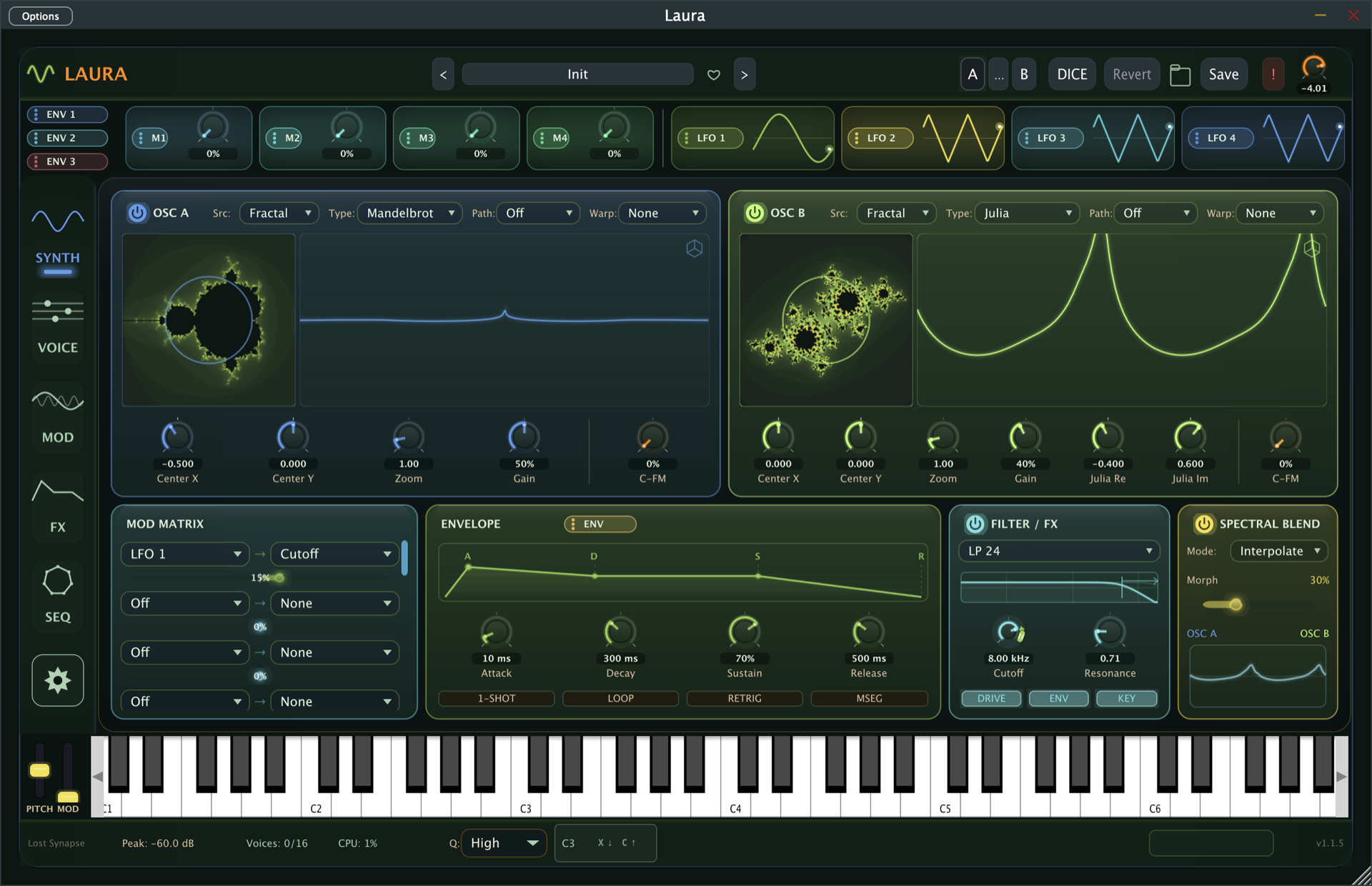
- Cleaner panels. Each panel catches a bit of light now instead of looking like a flat block, the side menu has a softer top edge, and the installed version now shows in the footer.
- Quieter and lighter. Preset switching is click-free, the whole factory library sits at a consistent loudness, and a pass over the oscillator and voice path trims CPU on big chords.
Details
This release is about movement. The earlier versions gave Laura its voice. v1.1.6 gives you many more ways to make that voice move, and it opens Laura up to preset packs, starting with Substation.
Modulation grew in every direction. There are four LFOs now instead of two, and a third envelope, ENV 3, with a full ADSR and an MSEG mode. The mod matrix went from four slots to sixteen, and there's a faster way to fill them. Grab any source, whether an LFO, an envelope, a macro, or a sequencer output, and drop it on the knob you want it to move. The routing appears in the matrix, and the depth slider and its arrow take the colour of that source, so one look across the panel tells you what is driving what.
The sequencer learned to listen to the keyboard. It can keep running on its own, gate to the keys you hold, or retrigger from the top on each new key, which means one pattern can be a held drone, a riff you play in, or a stab you strum. The preset browser got favourites: star the patches you keep coming back to and filter to them instantly. It also opens as a solid overlay now and pauses the moving background while it is up, so it stays readable and easy on the CPU.
And Laura now takes preset packs. A pack is a set of patches that installs by dragging it onto the plugin, after which it lives in its own row in the browser. Substation is the first, a free techno pack of 27 club-ready patches covering basses, stabs, leads, plucks, and full sequences, built to drop straight into a track.
Underneath all of that is a polish pass. Switching presets is click-free, the whole library now sits at a consistent loudness so browsing no longer rides the fader, dense chords cost less CPU, and the panels catch a bit of light now instead of sitting flat. Small things on their own, but they add up to a synth that's more pleasant to work in.