Highlights
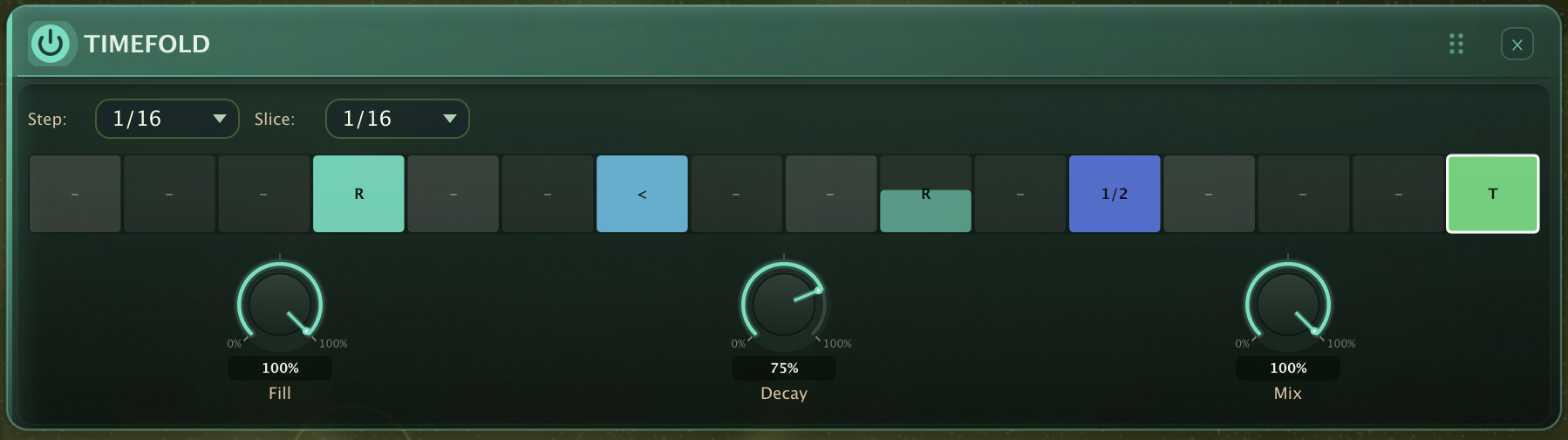
- Timefold, the seventeenth effect. A sixteen step pattern rides your tempo and each step decides where the playhead reads from: hold, reverse, jump back a beat, stutter, half speed. It is the tape stop, the reverse fill and the half time drop, written as a pattern instead of drawn as automation. Five factory chains built on it.
- MTS-ESP. Load any tuning master in your session, pick 22edo or just intonation or your own Scala file, and Laura follows it. No routing, no tuning files to import. Held notes retune as you change scale, and the footer names whatever scale is playing so you know it was picked up. On an MPE rig it will even take a different scale per note.
- Coarse and Fine on each oscillator. Two octaves of semitones and a tone of cents, per slot, behind a pill on the card. Drop a sample into one slot and pull it into tune with the rest of the patch instead of retuning the whole instrument.
- Macros you can name. Double click the caption and type. The name travels with the patch, so a preset you send someone arrives saying GROWL and OPEN UP instead of M1 and M2.
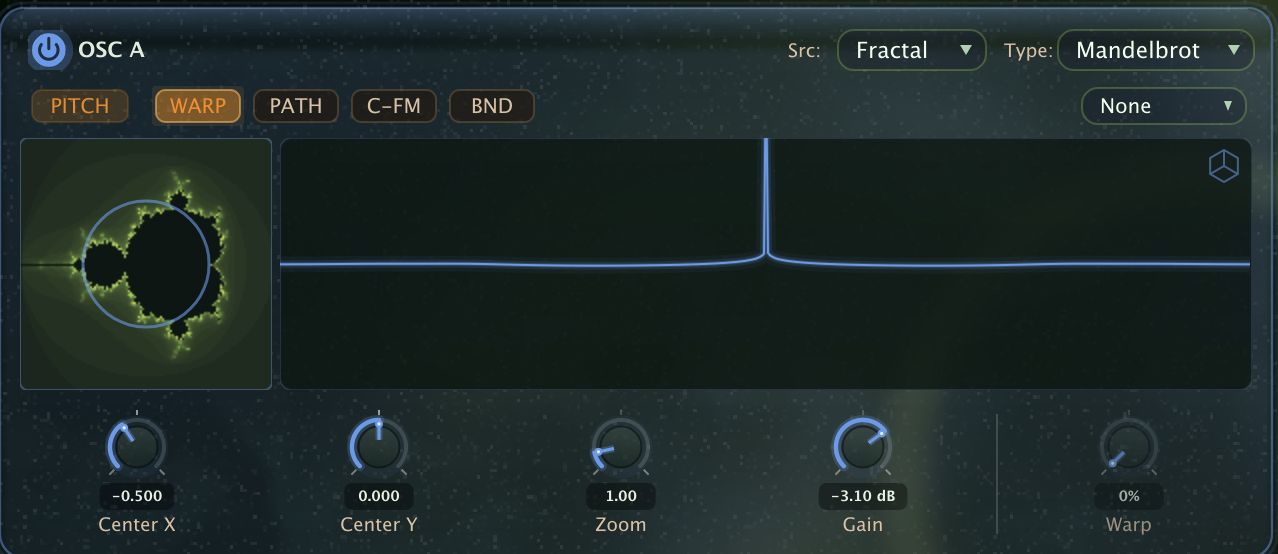
- The oscillator card had fifteen knobs on it and they were too small to aim at. Warp, path, cross FM and boundary lock now sit behind tabs, one group at a time, and the knobs are two to five times wider depending on your window. A dot on a closed tab tells you that group is doing something.
- Every knob feels different. A normal drag no longer jumps, the modifier fine drag is finer, the mouse wheel steps in useful increments, the unison count takes a drag or a scroll like a knob should, and the three way switches reach every position in one gesture. Controls that used to appear and vanish as you turned modulation up now dim in place instead, so your eye keeps its bearings.
- Nine sound fixes, all measured. A stuck tone that could survive a voice mode change, the zipper on the fractal path, tempo sync that ran the wrong way round, the Synapse filter that was quietly leaking away its resonance, the comb filter that would not ring, drift that was doing almost nothing, notes swallowed in the first block after a bounce started, and modulation that drew a ring on a macro knob without ever reaching the sound.
- The whole preset library is level. 302 patches, measured and matched, so browsing no longer swings sixteen decibels between neighbours. Init is a plain init now too, one oscillator and nothing in the path.
- Timefold is in Laura FX as well, same device, same day.
- Your patches, packs, and license carry over exactly as before.

Details
Part of this release came from a stranger being generous. A producer took the demo, built real tracks with it rather than poking at it briefly, and sent back a list of everything that got in his way. Forty odd items, some of them bugs, most of them the kind of friction you stop noticing in your own instrument because you built it and your hands already know where everything is. I worked through the whole list. A few of the items were the most useful things anyone has told me about Laura, and one of them was a bug I would never have found on purpose, because it needed you to be switching voice modes while holding a chord with unison up.
The single biggest thing he changed my mind about was the oscillator card. A fractal oscillator has a lot to say for itself: coordinates, zoom, gain, warp, a path that walks the sampling point around, cross modulation between the two oscillators, a boundary lock that pins the reading to the edge of the set. All of that was on the card at once, which on a normal sized window put every knob at about the width of your fingernail. He said, plainly, that it was too crowded and asked whether some of it could move. So warp, path, cross FM and boundary lock went behind four tabs, one group showing at a time, and the knobs grew by between two and five times depending on how big your window is. Each tab owns everything about its group including its mode selector, so nothing else on the card moves when you switch, and a tab carries a small dot when its group is actually doing something, so you can read a preset's shape without opening every tab to check.
Timefold is the device that took the longest: a month of work, finished in time for this release. It treats time as a pattern rather than something you draw by hand. Sixteen steps ride your host tempo, and each step chooses what the playhead does: play straight, hold where it is, run backwards, jump back a beat, stutter the last fragment, or drop to half speed. Draw a pattern once and the fill happens on the bar, every bar, in time. It is the sound people build in a sampler with a lot of patience, and it lives on a card with a scope so you can see the playhead being pushed around.
MTS-ESP is the other new thing and it came from the same producer plus a friend who writes in 22 equal divisions of the octave. If you have not met it: it is a small standard where one plugin in your session owns the tuning and every instrument that speaks it follows along. Load a tuning master, pick a scale, and that is the whole setup. There is nothing to configure in Laura, which is the point, and it is why Laura shows you the scale's name rather than a list to choose from. Two details took the longest and both came from the friend who actually uses this: hold a chord, change scale in the master, and the chord has to move under your fingers rather than waiting for you to replay it. And the tuning has to reach every pitch in the instrument, not just the oscillators, so the sub and the resonator go with it. Both do. On an MPE controller, where every note gets its own channel, a master can hand out a different scale per channel, and Laura reads those too, so two notes of the same chord can genuinely sit in different tunings.
The rest is a long tail of small things that add up to an instrument that argues with you less. Values that read in decibels where they are gains. A wavetable editor that opens when you mean it and closes however you try to leave. A window that remembers its size. Scroll wheels that scroll the thing you are pointing at rather than the thing behind it. Tooltips and scrollbars that look like they belong to the same program as everything else. And the preset library measured end to end and matched to one level, which is unglamorous work that you only notice when it is missing, because until now browsing from one patch to the next could jump by sixteen decibels.
If you own Laura this is a free update, as every update is and will be. Nothing about your saved patches, your packs, or your license changes. If you are on the fence, the demo is the full instrument for thirty minutes a session with no account and no card, and this is a good release to try it on, because a lot of what changed is the kind of thing you feel in the first ten minutes rather than read about in a list.